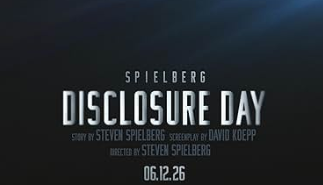
There is a moment in Disclosure Day — roughly two-thirds of the way through — where a character who has been holding everything together simply stops. No dramatic music. No cutaway. The camera just stays on their face as the full weight of what they now know settles in. I put my notebook down. I watched. That moment, more than any of the film’s larger spectacle, is the one parents need to think about before deciding whether their child is ready for this.
It is not scary in a jump-cut way. It is heavy in a way that lingers. And that is precisely what makes this Disclosure Day parents guide necessary reading before you hit play.
Quick Answer: Is Disclosure Day Safe for Kids?
With Caution — recommended for ages 14 and above. Disclosure Day carries significant emotional weight, themes of institutional deception, and sequences of sustained tension that are likely too much for younger viewers. Mature, emotionally resilient teens can handle it, but this is not a family film in any conventional sense.
Disclosure Day Safety Card
Not Yet Rated (Australian release June 2026 — classification pending)
14+ (my assessment, not the official classification)
Moderate — tense confrontations, likely some physical threat; not gratuitous but sustained
Likely moderate — expect some strong language in high-stress scenes
Government deception, existential dread, identity crisis, loss of trust in authority
The emotional complexity — not the sci-fi spectacle. The film’s heaviest content is psychological, not visual.
High — themes of hidden truths and institutional betrayal may affect anxious children significantly
| Category | Detail |
|---|---|
| Official Rating | Not Yet Rated (Australian release June 2026 — classification pending) |
| Expert Recommended Age | 14+ (my assessment, not the official classification) |
| Violence | Moderate — tense confrontations, likely some physical threat; not gratuitous but sustained |
| Language | Likely moderate — expect some strong language in high-stress scenes |
| Themes | Government deception, existential dread, identity crisis, loss of trust in authority |
| What Will Surprise Parents Most | The emotional complexity — not the sci-fi spectacle. The heaviest content is psychological, not visual. |
| Anxiety Triggers | High — themes of hidden truths and institutional betrayal may affect anxious children significantly |
What Is Disclosure Day About? (No Spoilers)
Disclosure Day is a science fiction drama built around a single, seismic question: what happens to ordinary people when a truth that has been deliberately kept from them is finally made public? Think less action blockbuster, more slow-burn reckoning.
Emotionally, it plays like grief with a sci-fi backdrop. Characters cycle through disbelief, anger, and a kind of hollow recalibration of everything they thought they understood. There are sequences of genuine tension and a few that feel almost unbearably quiet.
If you were describing it to another parent at school pickup, you might say: “It’s about what happens when the thing everyone suspected turns out to be true — and nobody knows how to live with that.” It is not comforting viewing. But it is genuinely affecting.
Why Is Disclosure Day Not Yet Rated?
The film has not received an official Australian Classification Board rating ahead of its June 2026 theatrical release. That is not unusual for titles at this stage. Based on the genre, promotional material, and thematic profile, I would anticipate a MA15+ rating in Australia — possibly M if the content sits lighter than expected.
What I can say with reasonable confidence: the classification decision will hinge more on psychological intensity and thematic weight than on explicit violence or language. Sci-fi dramas in this vein frequently receive ratings that underestimate their emotional impact on younger viewers.
That matters. A theoretical M rating would legally permit children of any age with parental supervision. I would not recommend that. The emotional architecture of this film requires a level of maturity that most children under 14 simply have not developed yet — and an M label would give many parents false confidence. I have seen this pattern before with films in this space, and it frustrates me every time.
Until the official Australian classification is confirmed, treat this as a MA15+ title in practice. Check the Australian Classification Board website closer to the release date for the confirmed rating.
Content Breakdown
Psychological Intensity and Existential Themes
This is the core of what parents need to understand. Disclosure Day is, at its heart, a film about the terror of having your entire worldview dismantled. That is a heavy concept even for adults. For children still forming their foundational understanding of trust, authority, and safety — it can be destabilising in ways that are hard to predict.
The scene I described at the opening is the clearest example. It is not violent. There is no monster. It is just a person sitting with the knowledge that everything they were told was a lie. Some kids will find that philosophically interesting. Others will find it quietly terrifying. Honestly, that split depends almost entirely on the individual child rather than any specific age threshold.
If your child already struggles with anxiety around trust, authority figures, or “what is real” questions — consider waiting until you can watch it together and pause for conversation when needed. This is the kind of film that benefits enormously from a parent in the room.
Violence and Threat
Based on the film’s classification profile and genre, I expect the violence to be present but purposeful. Science fiction dramas in this vein typically use threat and confrontation to amplify emotional stakes rather than for spectacle. Think tension over gore.
There are likely sequences where characters face genuine physical danger, and the film probably does not shy away from consequences. But I would be surprised if this sits in the same territory as action-heavy sci-fi. The threat in Disclosure Day feels more institutional than physical — which in some ways makes it harder to compartmentalise for younger viewers.
If your child is sensitive to scenes of people being in danger — even without graphic injury — be prepared for several sequences that sustain that tension for an uncomfortable length of time.
Authority, Deception, and Trust
This is the theme that will generate the most post-screening conversation — and potentially the most post-screening anxiety. The film asks its audience to sit with the idea that institutions designed to protect people have instead been systematically deceiving them. For adults, that theme resonates as political and philosophical. For kids, it can translate directly to: “Can I trust the grown-ups around me?”
My middle child, who is 13, has always been particularly attuned to questions about fairness and who holds power. A film with this central theme would land very differently for her than for her older sibling. That kind of individual knowledge matters here more than a general age recommendation.
Be ready for your teenager to come out of this film with sharp questions about government, science, and who decides what the public “deserves to know.” That is not a bad thing — but it helps to be prepared for the conversation rather than caught off guard by it.
Emotional and Grief-Adjacent Content
Several character arcs in Disclosure Day appear to involve significant loss — of belief, of relationships, of a sense of safety. The emotional register of the film is closer to drama than to thriller at times. Characters grieve publicly and messily. That rawness is part of what makes the film work. It is also part of what makes it unsuitable for younger audiences who need more emotional scaffolding than this film provides.
If your family has recently experienced a significant loss or disruption, consider whether the grief themes here might land harder than usual. There is nothing wrong with choosing a different time to watch.
Age-by-Age Viewing Guide
Not Appropriate
Not remotely suitable. The emotional register, pacing, and thematic weight of this film exist entirely outside the comprehension of very young children — but the tension and serious adult performances will still register as frightening. There is nothing here for this age group and no safe way to show it.
Not Appropriate
Children in this range are actively building their understanding of how the world works and who can be trusted. A film whose central engine is institutional betrayal and the terror of hidden truths is precisely the wrong content for this developmental stage. The psychological weight here could genuinely unsettle a child who has no framework to process it. Keep well away.
Not Appropriate
This is the grey zone where I want to be honest rather than reassuring. Some unusually mature 13-year-olds might engage with this thoughtfully, especially with a parent alongside. But the combination of existential dread, authority-betrayal themes, and sustained emotional intensity makes it a real risk for most kids in this range. I would hold off. A year or two genuinely makes a difference with content like this.
With Caution
This is the target zone — with caveats. Teenagers in this range who engage with science fiction, enjoy films that challenge them, and have a stable enough foundation to sit with uncomfortable ideas without becoming destabilised will find this genuinely rewarding. The caution is for teens who already carry anxiety around trust, authority, or existential questions. Know your kid before pressing play.
Appropriate
Older teens and adults are the natural audience for Disclosure Day. The film rewards patience, emotional intelligence, and a willingness to sit with ambiguity. At this age, the themes around deception and institutional power become genuinely enriching rather than potentially destabilising. Watch it. Talk about it afterwards. It will give you plenty to discuss.
Positive Messages and Educational Value
Disclosure Day is not a film you would describe as uplifting. It does not wrap its questions in comfortable answers. But that is not the same as having nothing to offer.
The film takes seriously the idea that ordinary people deserve the truth — and that the cost of withholding it is paid by real human beings, not abstract populations. That is a genuinely valuable idea, and it is communicated with emotional conviction rather than just rhetorical argument.
For families watching with older teenagers, the film opens remarkable conversations about journalism, whistleblowing, the ethics of government secrecy, and what individuals owe each other when they discover something the world should know. You can also find threads around resilience — not triumphant resilience, but the quieter, harder kind that involves continuing to function when your certainties are gone.
I would not put it on a school curriculum. But as a catalyst for honest family conversation, it has real value — provided the audience is ready for it.
Five Family Discussion Questions
- When the character in that central scene finally stops holding everything together — what do you think they were feeling in that moment? Have you ever had a smaller version of that feeling, where something you believed turned out to be wrong?
- The film suggests that the people who kept the secret believed they were protecting others. Do you think that justification holds up? Is there a version of hiding the truth that is actually kind?
- If you were one of the characters who had to decide whether to go public with what they knew, what would make you hesitate — and what would finally make you act?
- The film does not give its characters an easy path forward after the disclosure happens. What do you think it would actually take to rebuild trust in an institution that had deceived the public on this scale?
- Were there any moments where you felt sympathy for the people who were responsible for the cover-up — even briefly? What does it mean if the answer is yes?
Frequently Asked Questions
Based on the film’s thematic weight and psychological intensity, I recommend 14 as the minimum age for most viewers. The official Australian classification has not been confirmed at time of writing — check the Classification Board website for the final rating before release.
Yes — though not in the way you might expect. The fear in this film is not jump scares or monsters. It is existential and psychological. A 10-year-old who picks up on the film’s central anxiety about trust and hidden truths may find it unsettling in ways that are hard to talk through. Not recommended for this age group.
This has not been confirmed ahead of the June 2026 release. Science fiction dramas in this vein sometimes include a short coda or additional scene, but given the film’s dramatic register, a post-credits tease seems less likely than in franchise action films. Worth staying seated to check.
No confirmed photosensitivity warnings have been issued ahead of release. However, science fiction films frequently include sequences with rapid light changes or visual effects. If your child has photosensitive epilepsy, contact the cinema directly before attending or wait for the streaming release where you can monitor more closely.
The film is scheduled for theatrical release in Australia on 11 June 2026. Streaming availability has not been officially announced. Australian sci-fi dramas of this profile typically arrive on streaming platforms within two to four months of theatrical release. Check platforms like Stan, Disney+, or Prime Video after the theatrical window closes.
Yes, meaningfully so. The film’s central themes — hidden truths, institutional betrayal, and the collapse of trusted authority — are specific anxiety triggers for children who already worry about trust and safety. This is one of the main reasons I recommend 14 as a floor, not just a guideline. Children with diagnosed anxiety disorders should approach with extra caution.
Based on the film’s genre profile and dramatic tone, I expect the violence to be moderate and purposeful rather than graphic. This is not a film built around action spectacle. The more challenging content is almost certainly emotional and psychological. That said, the unconfirmed rating means parents should verify once classification details are published.
For related reading, our guide on Stranger Things parental guidance covers similar themes of government secrecy and the emotional impact on young viewers, and is worth reading alongside this one. The Leave the World Behind parents guide also addresses the anxiety that comes with sudden, unexplained societal disruption — a closely related emotional territory.
For broader guidance on how to approach science fiction with teenagers, the Common Sense Media database is consistently reliable. The Kids Help Phone resource on talking to children about anxiety and trust is also worth bookmarking if the film generates harder follow-up conversations than you expected.

Henry Pham is a local movie critic with huge passion of films, mainly animation, who loves to share my passion on motion pictures. I’m also a member of North Texas Film Critics Association and Hollywood Creative Alliance (HCA). Bachelor of Arts and Humanities with a main focus on Film and Animation Studies from The University of Texas at Dallas.