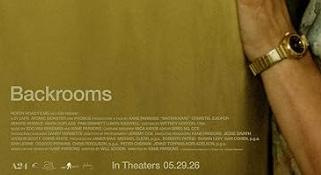
Backrooms Parents Guide 2026: What Parents Need to Know Before Letting Kids Watch
Is Backrooms safe for kids? The short answer is no — and based on everything I know about this property and its source material, I would be genuinely surprised if the final film earns anything lower than a hard R rating in the US or MA15+ in Australia.
That said, I want to give you the full picture here, not just a one-word verdict. The Backrooms concept has a deeply specific cultural footprint among younger audiences — particularly kids aged 10 to 15 — which makes this guide more urgent than most.
With Caution — but really, No for most families. Backrooms is a psychological horror thriller rooted in internet creepypasta mythology. Expect sustained dread, disturbing creature content, and potentially intense psychological horror sequences. This is not a film for children, and the unofficial age floor I would set is 17.
Quick-Scan Safety Card
Not Yet Rated (expected R / MA15+ AU) — theatrical release May 28, 2026
17 and above — younger teens will almost certainly find this distressing
High — expected creature horror, pursuit sequences, and threat-of-death tension throughout
Likely moderate to strong — consistent with R-rated horror; possible strong profanity under stress
Very High — isolation, reality-distortion, and existential dread are the core of this story
Expected High — the Backrooms format is built for sudden horror reveals
Their kids already know this world intimately from YouTube and TikTok — which makes the horror hit harder and differently than expected
Unlikely to be a significant element — not a noted theme of the source material
Not expected to be a notable concern based on source material tone
| Category | Detail |
|---|---|
| Official Rating | Not Yet Rated (expected R / MA15+ AU) — theatrical release May 28, 2026 |
| Expert Recommended Age | 17 and above — younger teens will almost certainly find this distressing |
| Violence Level | High — expected creature horror, pursuit sequences, and threat-of-death tension throughout |
| Language Level | Likely moderate to strong — consistent with R-rated horror; possible strong profanity under stress |
| Psychological Horror | Very High — isolation, reality-distortion, and existential dread are the core of this story |
| Jump Scares | Expected High — the Backrooms format is built for sudden horror reveals |
| What Will Surprise Parents Most | Their kids already know this world intimately from YouTube and TikTok — which makes the horror hit harder and differently than expected |
| Substance Use | Unlikely to be a significant element — not a noted theme of the source material |
| Sexual Content | Not expected to be a notable concern based on source material tone |
What Is Backrooms About?
Based on a creepypasta internet myth that has become one of the most viral horror concepts of the last decade, Backrooms centres on characters who “noclip” out of ordinary reality and find themselves trapped in an endless, liminal space — an infinite maze of yellow-wallpapered rooms bathed in humming fluorescent light.
The emotional core here is profound isolation. Characters experience the terror of being utterly separated from the world they know, with no map, no exit, and no certainty that anyone is coming for them. There are creatures. There is paranoia. There is the specific dread of spaces that look almost familiar but are deeply wrong.
Parents should know this triggers themes of entrapment, hopelessness, and psychological unravelling. It is not a monster movie in the traditional sense. The fear is existential — and that lands differently for different ages.
Why Is It Not Yet Rated — And What Does That Actually Mean?
At the time of writing, Backrooms has not received an official classification ahead of its May 28, 2026 theatrical release. That is not unusual for a horror film this close to release. What I can tell you is what the content strongly suggests.
The source material, the creative pedigree of the project, and the genre conventions all point toward an R rating in the US and almost certainly MA15+ under the Australian Classification Board’s system. MA15+ means the content is legally restricted to persons 15 and over in Australia — and that feels about right on paper. Honestly, I think 15 is still too young for a significant portion of children given the psychological intensity of this particular property.
Here is the thing though. Official ratings assess content categories — violence, language, sex. They are not designed to measure the specific psychological weight of a concept like the Backrooms, which preys on something deep and particular: the fear of being lost in a place that should not exist. That does not show up neatly in a rating box.
The MA15+ or R classification tells you what is in the film. It does not tell you how it will land for a 14-year-old who has spent three years watching Backrooms content on YouTube. Those kids may be more desensitised — or they may find the theatrical scale of it far more intense. Either way, know your child before buying that ticket.
Violence and Creature Horror
The Backrooms mythology involves entities — creatures that exist within the liminal spaces and hunt those who are trapped there. Based on well-established lore and the direction the film is expected to take, parents should anticipate pursuit sequences, sudden creature reveals, and moments of characters being harmed or killed.
What caught me when I reviewed similar liminal-horror properties — and I want to be upfront that I am working from source material and pre-release information here rather than the finished cut — is how effective this type of horror is at building sustained dread rather than delivering isolated shocks. The violence may not be gory in the traditional slasher sense. It could be worse than that. Sustained, escalating terror with no safe resolution is psychologically harder to shake than a single gross moment.
If your child has anxiety, a history of sleep disturbances, or is sensitive to themes of being lost or trapped, this film poses a real risk of lingering distress. That is not a general warning — it is a specific one. The Backrooms concept is uniquely effective at triggering exactly those fears.
Psychological Horror and the “Liminal Space” Effect
This is the section most parents will not find in a standard content guide. And I think it is the most important one.
Liminal horror works by exploiting our instinctive discomfort with spaces that are in-between — places that feel evacuated of human presence, abandoned, wrong in ways we cannot name. Empty shopping malls. Unused swimming pools. School hallways at 2am. The Backrooms takes that feeling and stretches it to infinity.
For adults, this is unsettling. For children and adolescents whose sense of safety is still being constructed, it can be genuinely destabilising. My 11-year-old knows about the Backrooms from school — virtually every kid in his class does. That familiarity does not make the horror safer. If anything, seeing something your imagination has already built get rendered on a cinema screen at full volume and scale is more intense, not less.
The psychological impact of liminal horror is documented in child development research. Children under 14 are more vulnerable to internalising fictional threats as real possibilities, particularly when those threats involve familiar environments rendered threatening. This is worth a genuine conversation before and after viewing — if viewing happens at all.
Language
Based on comparable horror thrillers in this genre, expect moderate to strong language. Characters under extreme stress in survival horror situations typically generate the kind of language parents of younger children will find objectionable. Think strong profanity, potentially including the most common expletives, used in moments of fear and confrontation.
This is unlikely to be the defining content concern for most parents reading this guide. But it is worth knowing.
The “My Kids Already Know This” Problem
I want to spend a moment on something that comes up constantly with properties born on the internet.
The Backrooms is not a new concept to most children aged 10 and above. Kane Pixels’ YouTube series alone has accumulated hundreds of millions of views. Your kids have likely seen Backrooms content, talked about Backrooms content at school, and perhaps even played Backrooms-inspired games. Some parents interpret this as meaning the film will be less scary for their children. I would argue the opposite.
Familiarity with the mythology deepens the fear — it does not dilute it. A child who has spent time imagining what the entities look like and now sees them rendered with a film budget and theatrical sound design is not protected by prior exposure. They are primed for it.
Ask your child what they already know about the Backrooms before any conversation about seeing this film. You may be surprised how detailed their knowledge is. Use that as the basis for an honest discussion about what the film is likely to contain and how they think they will handle it. That conversation is more valuable than any rating.
Age-by-Age Viewing Guide
Not Appropriate
Absolutely not. There is no version of this film that belongs anywhere near a child under five. The core concept — being separated from the world, trapped, hunted — maps directly onto the foundational fears of early childhood. Even the aesthetic of the Backrooms (flickering lights, empty endless rooms) would be traumatising for a toddler. This is not a close call.
Not Appropriate
Still a clear no. Children in this age range are at peak vulnerability to internalising fictional threats. The themes of entrapment, being lost without hope of rescue, and predatory creatures are precisely the fears that dominate this developmental window. Even children who present as “not scared” by horror content can experience delayed anxiety responses — sleep issues, separation anxiety — days after viewing.
Not Appropriate
I know this age group will push back hard on this verdict — and their parents will feel the pressure. But I hold the line here. Pre-teens in this range are often more emotionally reactive to horror than they appear in the moment, and the psychological dimension of this particular story is genuinely rough. Their familiarity with the Backrooms as an internet concept does not constitute readiness for a theatrical horror experience built around it. Wait.
With Caution
This is where it gets genuinely complicated. Mature 15 and 16-year-olds who are already engaging with horror content and have a solid emotional baseline may handle this reasonably well. The 14-year-old bracket is where I become more hesitant — early teens vary enormously in their readiness for sustained psychological horror. Know your kid. If they are prone to anxiety, have a history of sleep issues, or are in an emotionally difficult period, this is not the right film right now.
Appropriate
For older teens and adults who enjoy the horror genre, Backrooms looks like a genuinely interesting cinematic experiment. The mythology has real conceptual depth, and a well-executed theatrical version could be a significant horror experience. My 18-year-old is planning to see it — and honestly, I am curious enough about the execution that I will probably be there too.
Positive Messages and What Families Can Take From This
I will be direct: Backrooms is not designed as an educational experience. It is a horror film built to frighten you. Searching for conventional positive messages here would be manufacturing something that is not honestly there.
That said, for older teens who do watch it, there are genuine discussion threads worth pulling on. How do we cope when we lose all sense of orientation and control? What does survival instinct look like under truly impossible circumstances? Why do humans find empty, familiar spaces so deeply unsettling — and what does that tell us about how we experience safety?
The internet mythology behind the Backrooms is also genuinely fascinating from a cultural and psychological standpoint. For the right age group, this could open a conversation about how horror works, why certain concepts go viral, and what collective fears look like in the age of the internet.
Five Discussion Questions for Families
- The Backrooms started as a single creepy image posted online and became a global phenomenon. Why do you think a concept like that — an ordinary place made infinitely wrong — catches on so quickly and so widely?
- Characters in the film have to keep moving even without knowing where they are going or whether it will help. Have you ever had to make a decision while feeling completely lost, with no guarantee it was the right one?
- The creatures in the Backrooms do not behave like monsters in most films — they are part of a place rather than characters with motives. Does that make them scarier or less scary to you, and why?
- One of the core horrors here is being separated from reality with no way to communicate it to anyone outside. What does that specific fear — of being lost somewhere no one can find you — tell us about what we value most?
- The Backrooms aesthetic deliberately uses familiar, mundane settings rather than obviously frightening ones. Why do you think ordinary spaces — empty offices, old carpet, fluorescent lights — can be more unsettling than something overtly monstrous?
Frequently Asked Questions
Yes, clearly. The psychological intensity of the Backrooms concept — isolation, entrapment, reality distortion, creature pursuit — targets the core fears of this developmental stage directly. I would not allow a 10-year-old to see this, and I say that as someone who reviews horror content professionally and as a parent.
The film is not yet officially classified at time of writing. Based on genre, source material, and comparable horror thrillers, an MA15+ classification from the Australian Classification Board is the most likely outcome. That means it is legally restricted to ages 15 and over, though my personal recommendation is 17 and above.
No confirmed information is available before the release date. Horror films in this space sometimes include brief post-credits teases to suggest sequels or expanded mythology. Given the Backrooms lore has many unexplored levels and entities, it would be consistent with the property — but treat this as speculation until the film is out.
This is a real concern worth raising. Flickering fluorescent lighting is central to the Backrooms aesthetic — it is a defining visual element of the concept. It is very likely that the film contains sustained flickering light sequences. If you or your child has photosensitive epilepsy or migraines triggered by flashing lights, check for warnings at your cinema before attending.
Backrooms is scheduled for theatrical release on May 28, 2026. Streaming availability has not been confirmed at time of writing. Given typical theatrical windows of 45 to 90 days, an Australian streaming release would likely follow in mid to late 2026. Check your preferred platform closer to the theatrical date for announcements.
Not necessarily — and possibly the opposite. Familiarity with the mythology can prime a child for a more intense response when they experience it at cinema scale with professional sound design and cinematography. Prior YouTube exposure is not the same as readiness for a theatrical horror film. Consider their emotional baseline, not just their knowledge base.
No. The Backrooms originated as a piece of internet creepypasta — a fictional horror concept born from a single image posted to 4chan in 2019. It is entirely fictional, though the mythology has been expanded enormously by online creators since. Younger children sometimes struggle to separate creepypasta from reality, which is worth addressing before viewing.
The core themes involve psychological disintegration under impossible circumstances — which can be confronting for viewers managing anxiety, depression, or trauma. Direct self-harm is not an established element of the source mythology. That said, the existential hopelessness of being permanently trapped is thematically heavy. Parents of children with mental health challenges should approach with care.

Brian Eggert is an award-winning film critic and the founder of Deep Focus Review, where they have provided in-depth cinematic analysis since 2007. A Tomatometer-Approved critic, Brian Eggert was honored as the 2024 “Critic of the Year” by the Independent Film Critics of America (IFCA).
With nearly two decades of experience in film journalism, their expertise spans digital, broadcast, and syndicated media. Brian Eggert is the co-host of the nationally syndicated show The CineFiles and a regular guest on KARE 11 (NBC Minnesota). Their expert commentary is also featured across various prominent film podcasts, cementing their reputation as a leading voice in contemporary film criticism.