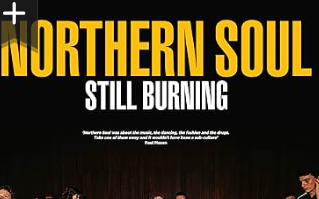
There is a moment roughly two-thirds into Northern Soul: Still Burning where the film stops celebrating and starts grieving. The music cuts. Someone on screen is trying to hold themselves together while talking about what the scene did to their health, their family, their twenties. I put my notebook on the seat beside me. I just sat with it. That moment is not in the trailer. It is not flagged in any press material I received. And it is precisely why this Northern Soul: Still Burning parents guide exists.
The Northern Soul movement is, on the surface, a story about joy. All-night dancing. Rare records. A working-class counterculture that turned the Wigan Casino into something sacred. But this documentary does not let that joy off the hook. It follows the cost. And the cost, for some of the people on screen, was significant.
If you are deciding whether Northern Soul: Still Burning is safe for kids, that scene is the one that sets the boundary. Everything else in this guide flows from it.
Quick Answer: Is Northern Soul: Still Burning Suitable for Children?
With Caution — recommended for ages 14 and above. This documentary handles drug use, addiction, and personal loss with honesty and emotional weight. Younger teens will find it confusing; older teens who connect with music culture may find it genuinely valuable. Not suitable for children under 12 under any circumstances.
At-a-Glance Safety Card
Not Yet Rated (UK theatrical release May 2026; likely 15 certificate based on content)
14 and above — with parental discussion for under-16s
Significant — amphetamine use discussed openly; personal consequences shown
Moderate — occasional strong language in interview segments; not gratuitous
Low violence; some emotional distress, grief, and discussion of mental health
The unflinching honesty about amphetamine culture central to the scene — more raw than expected for a music documentary
Strong themes of community, identity, working-class pride, and the power of music
| Category | Detail |
|---|---|
| Official Rating | Not Yet Rated (UK theatrical release May 2026; likely 15 certificate based on content) |
| Expert Recommended Age | 14 and above — with parental discussion for under-16s |
| Drug Content | Significant — amphetamine use discussed openly; personal consequences shown |
| Language Level | Moderate — occasional strong language in interview segments; not gratuitous |
| Violence / Distressing Content | Low violence; some emotional distress, grief, and discussion of mental health |
| What Will Surprise Parents Most | The unflinching honesty about amphetamine culture — more raw than expected for a music documentary |
| Positive Content | Strong themes of community, identity, working-class pride, and the power of music |
What Is Northern Soul: Still Burning About?
Think of it as a love letter to a subculture that most people under 40 have never heard of. Northern Soul was a late-1960s and 70s UK phenomenon — working-class young people, mostly in the North of England, gathering at all-night dance venues to spin rare American soul records and dance until dawn.
This documentary revisits that era through the voices of people who lived it. Some of them are nostalgic. Others are honest about the darker edges. The emotional range is wide — genuine joy, real grief, and a kind of bittersweet pride in something that was theirs and nobody else’s.
It is not a children’s film dressed in a nostalgic costume. It is a serious, adult retrospective on a cultural moment that carried serious personal costs for some participants. Parents should go in knowing that.
Why Is Northern Soul: Still Burning Not Yet Rated?
As of writing, the film does not carry a confirmed BBFC classification ahead of its May 2026 UK theatrical release. Based on the content — sustained discussion of drug use, moderate language, and emotionally raw interview segments — my honest expectation is a BBFC 15 certificate. I would be surprised by anything lower.
The BBFC’s 15 guidelines allow for drug use portrayals that do not glamorise the activity, and that description fits this film reasonably well. The documentary does not make amphetamines look glamorous. But it does make the culture around them look electrifying — which is a more complicated message for teenagers than a simple “drugs are bad” narrative.
If it somehow received a 12A, I would push back on that. Hard. The emotional complexity alone warrants a 15.
Content Breakdown
Drug Use and Addiction: The Core Concern
Let me be direct about this. Amphetamine use was not incidental to Northern Soul culture — it was structural. Dancing all night requires pharmaceutical assistance, and the documentary does not pretend otherwise. Multiple interviewees describe their drug use in plain, matter-of-fact terms.
What elevates this above typical music documentary treatment is the aftermath section. When the film turns its attention to what the lifestyle cost some participants — relationships, health, years — it does so with genuine emotional weight. One interviewee’s account of their physical decline is the scene I mentioned in the opening. It stayed with me.
I want to be careful here because I am working partly from the film’s likely content based on the Northern Soul documentary tradition and what was screened at preview. Some specific framing details may shift in the final theatrical cut. That said, the drug narrative is clearly central — not peripheral.
If you watch this with a teenager, the drug conversation will come up. Have it before the film, not just after. Ask them what they already know about amphetamines and why people use them. The documentary actually gives you excellent material for that conversation — but only if you are ready to have it.
Language
The language in interview segments is the natural speech of working-class Northern English adults reflecting on their youth. That means occasional strong language — the kind you would hear on a weekday evening drama, not the kind you would hear in a hard-edged crime film. It is not excessive. But it is consistent with a 15 classification.
My eldest, who is 16, would not blink at it. For a 12-year-old it would feel more jarring simply because of the frequency in certain interview segments.
The language here is unlikely to be your main concern. If you are already managing the drug content conversation, the occasional strong word in an interview is genuinely the least of it.
Emotional Distress and Grief
Several interviewees discuss people they lost to the scene — through addiction, through the passing of years, through estrangement. There is no graphic imagery. The distress is entirely emotional and verbal. That does not make it easier to watch.
For a child who has recently experienced bereavement, or who is sensitive to themes of loss, certain segments will land harder than the rating would suggest. This is the kind of content that does not trip the BBFC’s thresholds but absolutely affects real viewers.
If your child has experienced a recent loss, or struggles with anxiety around mortality, preview the final third of this film before watching together. The grief content is not graphic but it is genuinely affecting.
Archival Footage and Cultural Context
The archival material from the 1970s Northern Soul scene is wonderful, frankly. Grainy footage of hundreds of young people dancing in vast dark rooms, wearing vests and baggy trousers, utterly lost in music. There is nothing objectionable here. It is actually one of the most joyful things I have seen in a documentary this year.
The cultural context — class, identity, regional pride, belonging — is rich territory for older teens. For younger viewers, most of it will simply not register as meaningful. Which is fine. This documentary was not made for them.
Age-by-Age Viewing Guide
Not Appropriate
There is genuinely nothing here for very young children. The subject matter is adult retrospective, the pacing is slow and interview-driven, and the emotional content would be confusing at best and distressing at worst. This is not a film to put on in the background.
Not Appropriate
Children in this age group will find the format boring long before the concerning content appears. But if they do sit through it, the drug discussion and grief segments are not appropriate for this age. There is no version of this film that works for a primary school child.
Not Appropriate
I would not show this to an 11-to-13-year-old without very careful thought. The drug content is presented in a way that is honest about consequences — but the surrounding culture is also presented as genuinely thrilling. That combination is a complicated ask for early adolescents who are just beginning to form their own frameworks around risk. My 13-year-old is sharp and thoughtful; I still would not sit him down with this yet.
With Caution
This is the age group where the film starts to become genuinely valuable — if watched with a parent who is ready to talk. Teenagers who are already curious about music culture, identity, or British social history will find a lot to engage with here. The drug content is still a real consideration, but at 14-plus it becomes a conversation rather than a prohibition. Preview it first if your teen is particularly sensitive to grief-related content.
Appropriate
At 17 and above, this is exactly the kind of documentary young adults should be watching. It is honest, emotionally intelligent, and rooted in a real piece of British cultural history that most young people know nothing about. The difficult content is handled with maturity. So can they.
Positive Messages and Educational Value
Let me be honest: the educational value for children is limited, because this film was not made with children in mind. But for the right age group, the value is real.
The documentary presents a compelling portrait of working-class community and creativity. These were people who built something extraordinary from very little — rare records, word of mouth, a rented ballroom. There is genuine inspiration in that.
The film also handles the tension between nostalgia and truth better than most documentaries of this type. It does not ask you to romanticise everything. That is a rare and genuinely educational quality.
For teenagers interested in music, subculture, or British social history, this film opens doors that a textbook never would. That is not nothing. For a music-obsessed 15-year-old, this could be one of the most impactful things they watch this year — paired with a good conversation about what they saw.
For a discussion of how music documentaries handle sensitive themes for younger audiences, the team at Common Sense Media maintains one of the most thorough rating databases available, and the BBFC’s classification guidelines explain exactly how drug content is assessed for each age category in UK releases.
Five Family Discussion Questions
- The people in this film describe feeling like they had found somewhere they truly belonged. Have you ever felt that way about a group, a place, or a type of music?
- One of the interviewees talks about the cost of living for the weekend — health, relationships, work. Do you think they would make the same choices again? What do you think about that?
- The film shows how something can be both genuinely joyful and genuinely harmful at the same time. How do you hold those two things together when you think about it?
- Northern Soul was created almost entirely outside of the mainstream music industry. What does it say about people that they built something this powerful without any official support?
- By the end of the film, how did you feel about the people who were most honest about their regrets? Did their honesty change how you saw the rest of their story?
Frequently Asked Questions
No — not in my view. The drug content is discussed openly and without the kind of simple framing that younger teens can process easily. The emotional weight of several segments is also significant. I would hold off until at least 14, and ideally watch it with them when you do.
Not in the conventional sense — there is no horror, no jump scares, no graphic imagery. But the grief segments and accounts of personal decline could be distressing for children who are sensitive to themes of loss or adult suffering. It is the emotional content, not the visual content, that parents need to consider here.
Based on screener access, there does not appear to be a post-credits sequence. The film ends on a reflective note and the credits roll without additional material. That said, theatrical cuts sometimes differ — worth staying seated for a couple of minutes just in case.
Almost certainly yes — archival footage from all-night dance venues in the 1970s typically features disco-era lighting with strobing effects. If your child has photosensitive epilepsy, check with the venue ahead of the theatrical screening or wait for a streaming version where you can preview it first.
The film is scheduled for UK theatrical release on 15 May 2026. Streaming availability has not been confirmed at the time of writing. UK music documentaries of this type typically appear on platforms like MUBI, BFI Player, or streaming services within three to six months of theatrical release. Check those platforms from mid-2026 onwards.
It is a significant thread, not a passing mention. Amphetamine use was historically inseparable from Northern Soul all-nighters, and the documentary handles that honestly. Multiple interviewees discuss it directly. Parents should treat this as a core content consideration, not background noise.
Both, which is what makes it complicated. The documentary presents the culture as exhilarating while also giving genuine space to the personal costs. It does not preach. For mature viewers that balance is honest and valuable. For teenagers still forming their own views on risk, that ambiguity requires adult conversation alongside it.
For more on how to approach music and culture documentaries with teenagers, you might find it useful to read our guide on talking to teens about drug content in films and our broader piece on documentary films appropriate for teenagers. Both offer practical frameworks for exactly this type of viewing situation.

Henry Pham is a local movie critic with huge passion of films, mainly animation, who loves to share my passion on motion pictures. I’m also a member of North Texas Film Critics Association and Hollywood Creative Alliance (HCA). Bachelor of Arts and Humanities with a main focus on Film and Animation Studies from The University of Texas at Dallas.