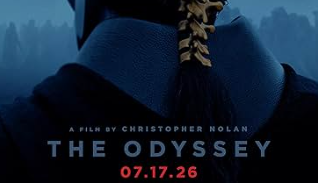
Three parents in our community group messaged me the same question within 24 hours of the first trailer dropping. “Is this the Homer epic — like, the actual Greek myth one?” Yes. It is. And that matters enormously for what you need to know before deciding whether your kids are ready for it.
The Odyssey parents guide you actually need is not just a content checklist. This is a story about war, loss, monsters, loyalty tested to breaking point, and a man trying to find his way home across a decade of suffering. Depending on how director Christopher Nolan handles the source material — and based on his track record, expect ambition and emotional weight in equal measure — this could land anywhere from a strong PG-13 to a soft R in Australian classification terms.
My honest verdict: approach with caution if your child is under 13, and sit with them if they are between 13 and 15. From 16 up, this looks like genuinely rewarding, challenging cinema.
Direct Answer: Is The Odyssey Safe for Kids?
With Caution — recommended for ages 13 and up. The Odyssey draws from one of the most violent, psychologically complex epics in Western literature. Expect battle sequences, mythological horror, themes of grief and abandonment, and morally complicated adult behaviour. Younger children are likely to find this distressing rather than exciting.
Quick-Scan Safety Card
Not Yet Rated (AU release July 16, 2026) — likely to receive MA15+ or M classification in Australia
13+ with parental discussion; 16+ for independent viewing
Moderate to High — epic battle sequences, mythological creature attacks, combat deaths
Likely mild to moderate — strong language possible but not expected to be the primary concern
High — monster sequences (Cyclops, Scylla, Charybdis, Sirens), scenes in the Underworld
High — prolonged grief, abandonment, wartime trauma, father-son separation
Low to Moderate — mythological romantic entanglements likely; explicit content not expected
The psychological weight. This is not an action-adventure romp. The Trojan War backstory and Odysseus’s sustained suffering carry real emotional heaviness.
| Category | Detail |
|---|---|
| Official Rating | Not Yet Rated (AU release July 16, 2026) — likely to receive MA15+ or M classification in Australia |
| Expert Recommended Age | 13+ with parental discussion; 16+ for independent viewing |
| Violence Level | Moderate to High — epic battle sequences, mythological creature attacks, combat deaths |
| Language Level | Likely mild to moderate — strong language possible but not expected to be the primary concern |
| Frightening Content | High — monster sequences (Cyclops, Scylla, Charybdis, Sirens), scenes in the Underworld |
| Emotional Intensity | High — prolonged grief, abandonment, wartime trauma, father-son separation |
| Sexual Content | Low to Moderate — mythological romantic entanglements likely; explicit content not expected |
| What Will Surprise Parents Most | The psychological weight. This is not an action-adventure romp. The Trojan War backstory and Odysseus’s sustained suffering carry real emotional heaviness. |
What Is The Odyssey About? (No Spoilers)
Based on Homer’s ancient Greek epic, The Odyssey follows Odysseus — a warrior king trying to return home to his wife and son after ten years fighting in the Trojan War. What follows is another decade of catastrophe, divine interference, and tests of endurance that would break most people.
At its emotional core, this is a story about longing. About what absence does to a family. About whether a father can still be a father after years of war and wandering have changed him beyond recognition.
Parents should know upfront: this story contains profound themes of grief, survivor guilt, marital faithfulness under pressure, and the long shadow that violence casts over people who carry it home. There are also genuinely terrifying mythological creatures. The adventure elements are real — but so is the darkness beneath them.
Why Is The Odyssey Not Yet Rated?
At the time of writing, The Odyssey has not received an official Australian classification rating, with theatrical release set for July 16, 2026. Based on the source material, the creative team involved, and the production’s scale, I would expect this to land at M or MA15+ from the Australian Classification Board.
Here is my honest professional read: an M rating would feel lenient. The emotional and psychological complexity of Homer’s epic — combined with what we can reasonably expect from a big-budget adaptation — points toward MA15+ territory. That is not a criticism. It is just an honest expectation.
I want to be careful how I say this, because ratings are a starting point, not a verdict. An MA15+ film can be entirely appropriate for a mature 13-year-old watching with engaged parents. A PG film can be wrong for a sensitive 10-year-old. Use the rating as a data point, not a decision-maker.
Content Breakdown
Violence and Battle Sequences
The Odyssey originates in war. The Trojan War forms the backstory, and its consequences — physical and psychological — run through everything that follows. Expect large-scale battle sequences with warrior combat, blood, and death. This is not cartoon violence.
What I want parents to understand is the texture of the violence. Greek epic violence is not random. It is purposeful, tragic, and often deeply human. Men die with names. That is harder for some children to process than faceless action-movie casualties.
If your child is sensitive to combat death — not just the spectacle of it, but the human cost — prepare them before the film. The violence in The Odyssey is likely to carry emotional weight, not just visual intensity.
Mythological Creatures and Horror Elements
The Cyclops Polyphemus. Scylla and Charybdis. The Sirens. The descent into the Underworld. These are not background elements — they are the set pieces audiences will remember. And for younger or more sensitive children, they represent genuine fright potential.
I have reviewed enough fantasy-adventure films to know that creature sequences often land harder than violence in terms of nightmares and lingering anxiety in children under twelve. The Cyclops sequence in particular — if handled faithfully — involves imprisonment, darkness, and the deaths of named companions. That is a specific kind of frightening.
Ask your child how they handle monster films before you go. If they struggled with creature sequences in films like Clash of the Titans or even the more intense moments in The Lord of the Rings, apply the same caution here.
Grief, Trauma, and Emotional Weight
This is where I think parents will be most caught off guard. Not the monsters. The grief.
Odysseus’s son Telemachus grows up without a father, surrounded by men who have given his mother up for dead and are vying to replace his absent father. His mother Penelope waits, year after year, in a kind of suspended mourning. These are not incidental emotional textures. They are the heart of the story.
My 11-year-old has recently started asking harder questions about what happens to families when parents go away — through deployment, illness, or separation. A story like this one lands very differently in that headspace. I am genuinely thinking through how I would handle watching this with her.
If your family has experienced prolonged separation, parental absence, or loss, approach the emotional content here thoughtfully. The father-son reunion elements can be profoundly moving — but the weight of the waiting can also hit close to home.
Adult Relationships and Mythological Romance
Homer’s Odyssey contains several romantic and sexual subplots — Odysseus with the goddess Calypso, his time with Circe, the pressure on Penelope from suitors. A mainstream cinematic adaptation is unlikely to render these explicitly, but some level of adult relationship content is essentially guaranteed by the source material.
Expect implied intimacy rather than explicit scenes. The romantic elements are unlikely to be the primary content concern for most parents — but they are worth knowing about, particularly if you have children in the 10 to 13 range who may ask questions.
The romantic content here exists within a mythological framework where gods and mortals interact freely. If you have previously had conversations about Greek mythology with your children, you already have the vocabulary to handle whatever this film raises.
Moral Complexity and Difficult Choices
Odysseus is not a straightforward hero. He lies, manipulates, and causes the deaths of companions through his choices. The epic has always asked uncomfortable questions about whether cunning is the same as wisdom, and whether survival justifies the cost.
Honestly, this is where the film earns its value for older teenagers. A 16-year-old watching a man wrestle with the difference between cleverness and integrity is watching something genuinely worthwhile. A 9-year-old may just be confused about why the hero keeps making things worse.
Age-by-Age Viewing Guide
Not Appropriate
There is nothing here for this age group. The creature sequences alone would be genuinely traumatising for a child under five. The emotional themes are entirely beyond their developmental stage. Keep this one well away from the little ones.
Not Appropriate
Even the most adventure-hungry eight-year-old is not ready for this. The monster sequences are frightening in ways that stick. The grief themes can land in complicated places for children at this developmental stage who are still forming their understanding of family stability and parental permanence. This is a clear no from me for under-tens.
With Caution
This is the grey zone. Some 12-year-olds who have read the source material, who handle horror-adjacent content well, and who have mature emotional processing will get a lot from this film. Others in the same age bracket will find the combination of creature horror and emotional heaviness genuinely overwhelming. You know your child. Watch it with them and talk as you go.
With Caution
Most teenagers in this range can handle the content — but I still recommend watching together at least once, because the moral complexity of Odysseus as a character is worth discussing out loud. The questions this film raises about loyalty, identity, and the cost of survival are exactly the kind of thing that benefits from a parent in the room to frame the conversation.
Appropriate
My 18-year-old has read the Fagles translation and is genuinely excited about this. For older teens and adults, this is the kind of ambitious literary adaptation that deserves a cinema audience. The themes are challenging but age-appropriate, and the film’s scale is built for the big screen.
Positive Messages and Educational Value
Here is something I find genuinely valuable about The Odyssey as a family conversation starter: it is one of the oldest survival stories in the Western tradition. And it is not a simple one.
The loyalty between Odysseus and Penelope — tested across twenty years and enormous distance — is a rare portrayal of commitment in cinema. The relationship between Odysseus and Telemachus carries real weight about what fathers owe their children and what children carry in the absence of a parent.
There is also something worthwhile in watching a protagonist who is undeniably flawed succeed not through physical dominance alone, but through intelligence, adaptability, and occasionally sheer stubborn refusal to give up. That is a meaningful model for older children and teenagers.
And look — I know some parents use film purely for entertainment and bristle at the educational framing. Fair enough. But if your teenager is studying classical literature, this film could be an extraordinary companion text. The conversations it opens are not trivial ones.
Five Family Discussion Questions
- Odysseus makes several choices in the story that get his companions killed, but he frames them as the only options available. Do you think he was telling himself the truth? What is the difference between a difficult decision and an excuse?
- Penelope waits for twenty years without certainty that Odysseus is alive or coming back. What do you think kept her going — and at what point, if any, do you think it would have been reasonable for her to stop waiting?
- Telemachus grows up without his father and then meets a man who is supposed to be him. How do you think you would feel meeting a parent who had been absent for most of your life? Would you trust them immediately, or would it take time?
- The gods in this story actively interfere in human lives — some helping Odysseus, some working against him. If you could ask one of those gods why they treated humans the way they did, what would you ask?
- By the end of the story, Odysseus has survived things that destroyed everyone around him. Do you think survival changes a person? What do you think he left behind — not just physically, but in terms of who he was — that he could never get back?
Frequently Asked Questions
Yes — genuinely. The Cyclops sequence, the monster encounters, and the Underworld scenes are frightening in ways that can cause lasting anxiety in young children. This is not a film for under-tens, regardless of how comfortable they seem with adventure stories. The content is simply not calibrated for that age group.
As of now, The Odyssey has not received an official Australian Classification Board rating. Based on the content likely present — battle violence, creature horror, emotional intensity — an M or MA15+ classification seems most probable. Check the ACB website closer to the July 16, 2026 release for the confirmed rating.
Not confirmed at this stage. Christopher Nolan films have not historically included post-credits sequences — his projects typically end when the narrative ends. That said, until we have confirmed viewing reports after the July 2026 release, staying through the credits is always a safe habit.
Unknown at this stage. Large-scale fantasy films in this genre frequently include lightning, battle flares, and supernatural lighting effects that can include strobing. If your child has photosensitive epilepsy, contact the cinema before attending and check for an official photosensitivity advisory closer to release.
The Odyssey is scheduled for theatrical release in Australia on July 16, 2026. Streaming availability has not been confirmed. Given typical theatrical windows, a streaming release would not be expected for several months after the cinema release. Check platforms like Netflix, Amazon Prime, or Disney+ closer to the end of 2026.
Expect violence closer to Gladiator or Troy in weight and tone than to Percy Jackson. The source material involves battlefield death, creatures killing named characters, and war trauma as a sustained theme. It is not gratuitous in the way some R-rated epics are, but it is not PG adventure-light either. Plan accordingly.
The source material includes relationships between Odysseus and divine figures including Calypso and Circe. A mainstream cinematic adaptation is unlikely to render these explicitly, but implied intimacy and adult romantic themes are reasonable expectations. It is not the primary concern — but worth knowing before you take a 10-year-old.
Knowing the mythology helps with context — but it does not change the emotional or visual intensity of the film. A 12-year-old who has read Percy Jackson and studied Homer in class will have better framing, but the creature sequences and grief themes still apply. Academic familiarity is useful preparation, not a content bypass.
For more guides on similar epic and mythology-driven films, see our Clash of the Titans parents guide and our breakdown of Troy parental guidance and age rating. For further reading on how to assess cinematic violence for different developmental stages, the Australian Classification Board and Common Sense Media both offer useful frameworks alongside our own expert reviews.

Brian Eggert is an award-winning film critic and the founder of Deep Focus Review, where they have provided in-depth cinematic analysis since 2007. A Tomatometer-Approved critic, Brian Eggert was honored as the 2024 “Critic of the Year” by the Independent Film Critics of America (IFCA).
With nearly two decades of experience in film journalism, their expertise spans digital, broadcast, and syndicated media. Brian Eggert is the co-host of the nationally syndicated show The CineFiles and a regular guest on KARE 11 (NBC Minnesota). Their expert commentary is also featured across various prominent film podcasts, cementing their reputation as a leading voice in contemporary film criticism.